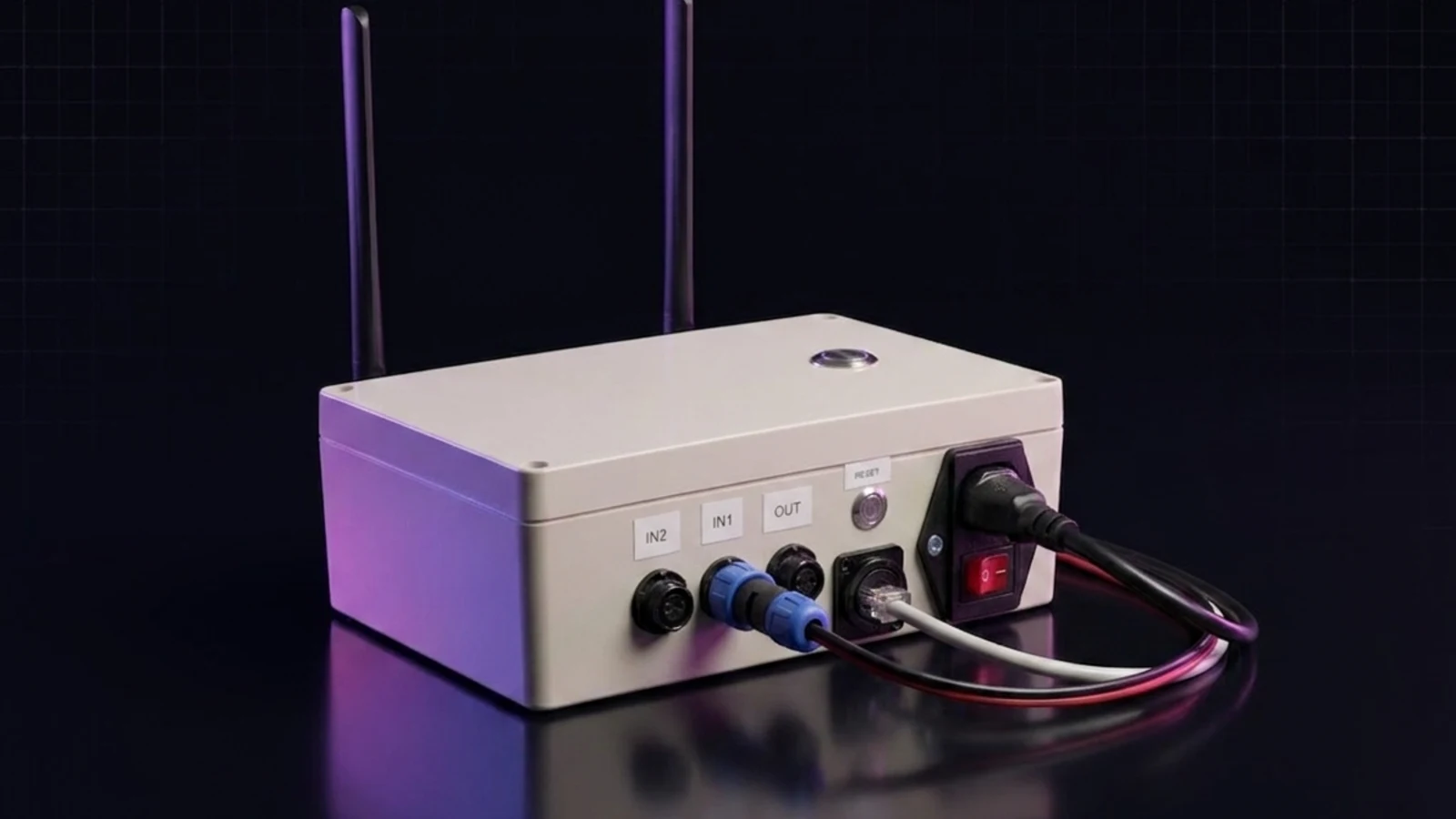
The phone that tells stories
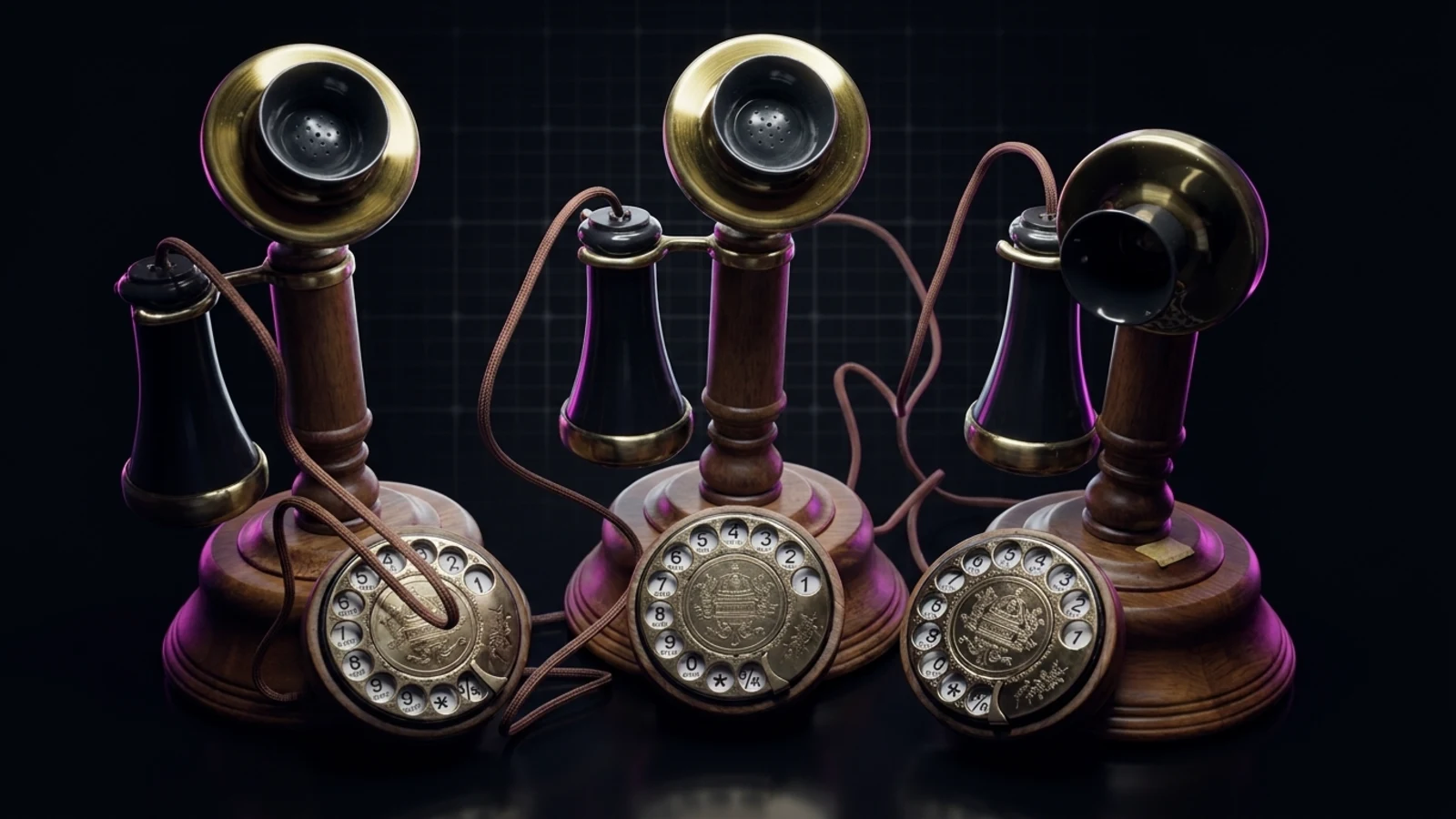
An interactive exhibit
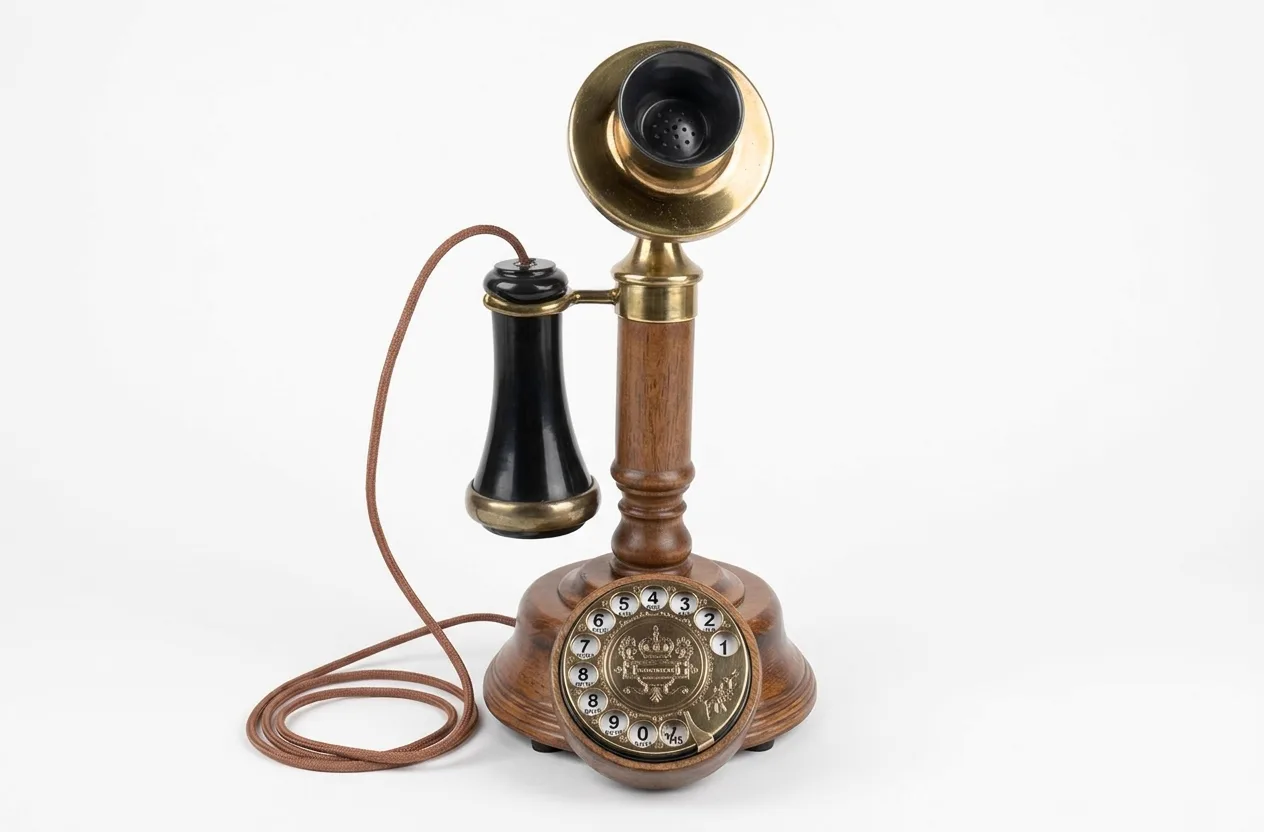
An old rotary telephone, the kind that once stood in every household. You lift the handset, dial a number — and instead of a dial tone, a story begins. For the TastyAir exhibition we turned a historical phone into an interactive guide: by dialing a number, the visitor picks a story to listen to, right in the handset.
The magic of the exhibit is that the phone is still a phone. Lifting the handset wakes the installation, the rotary dial selects a recording, and the speaker in the handset plays the story — no touchscreen, no app. What turns simple listening into an experience is the feel of the dial itself — many younger visitors are dialing a number for the first time in their lives.
Technology
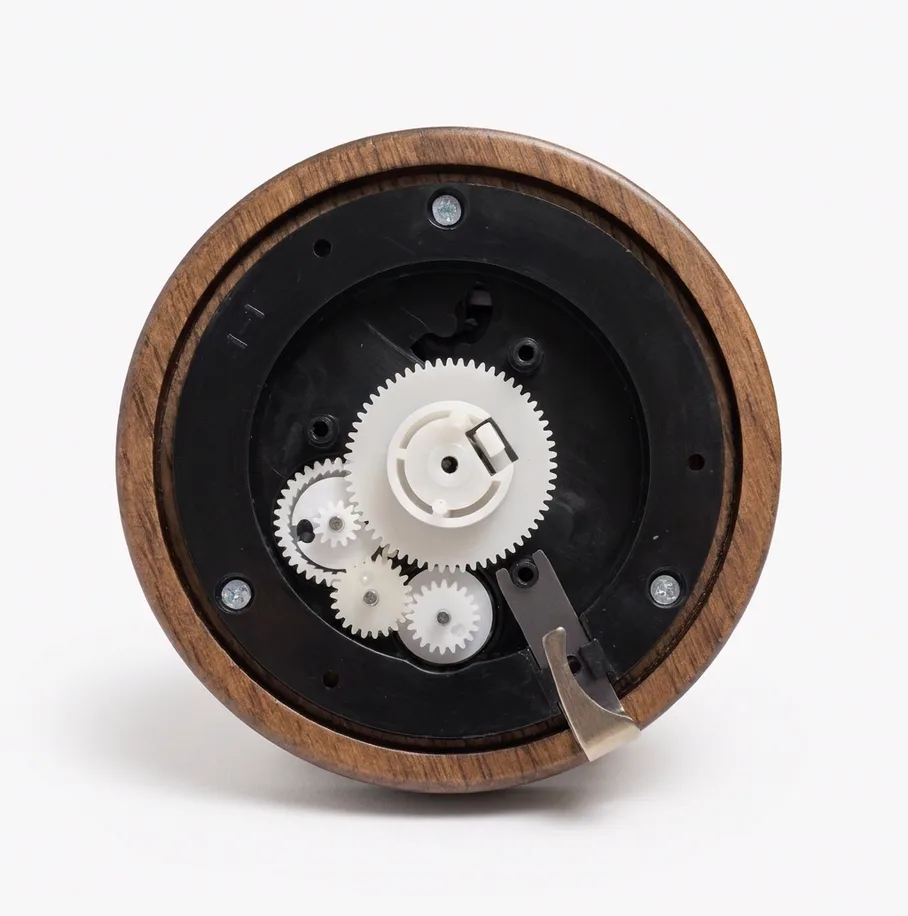
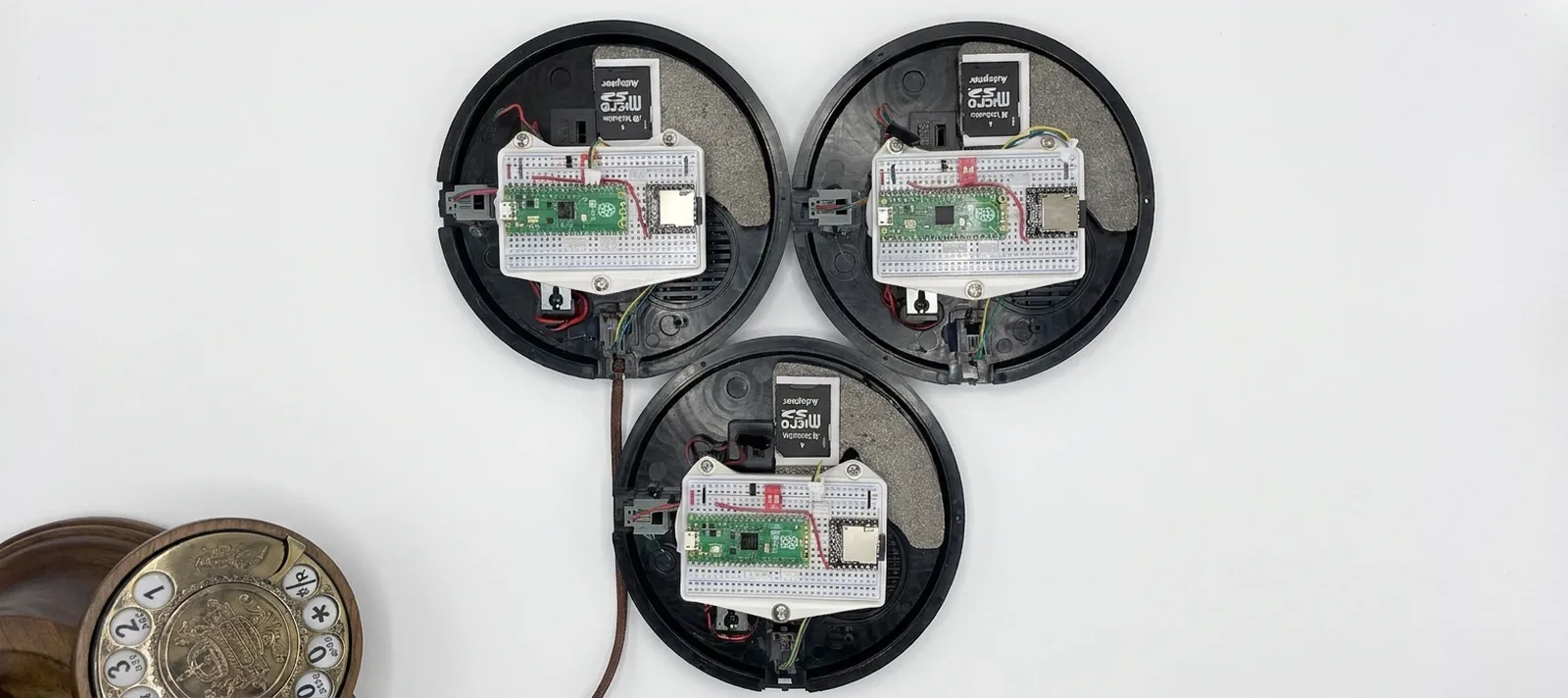
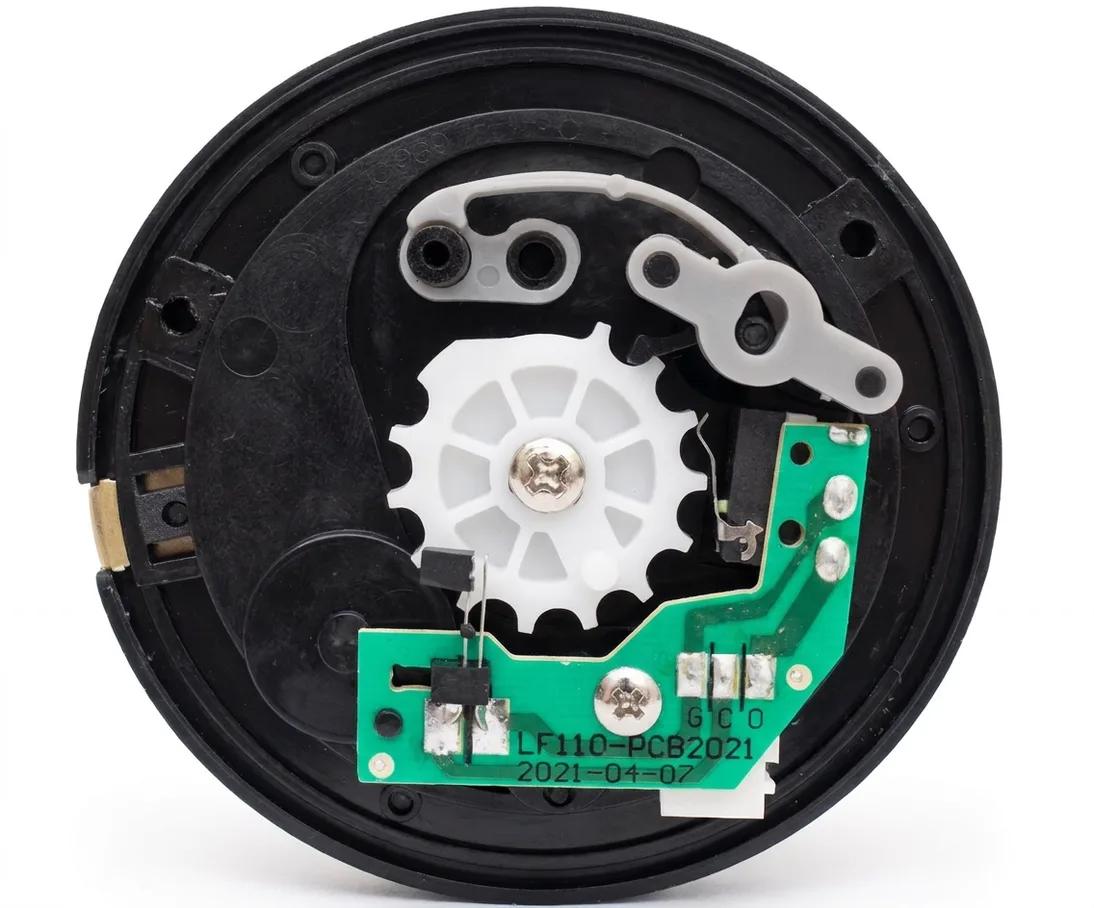
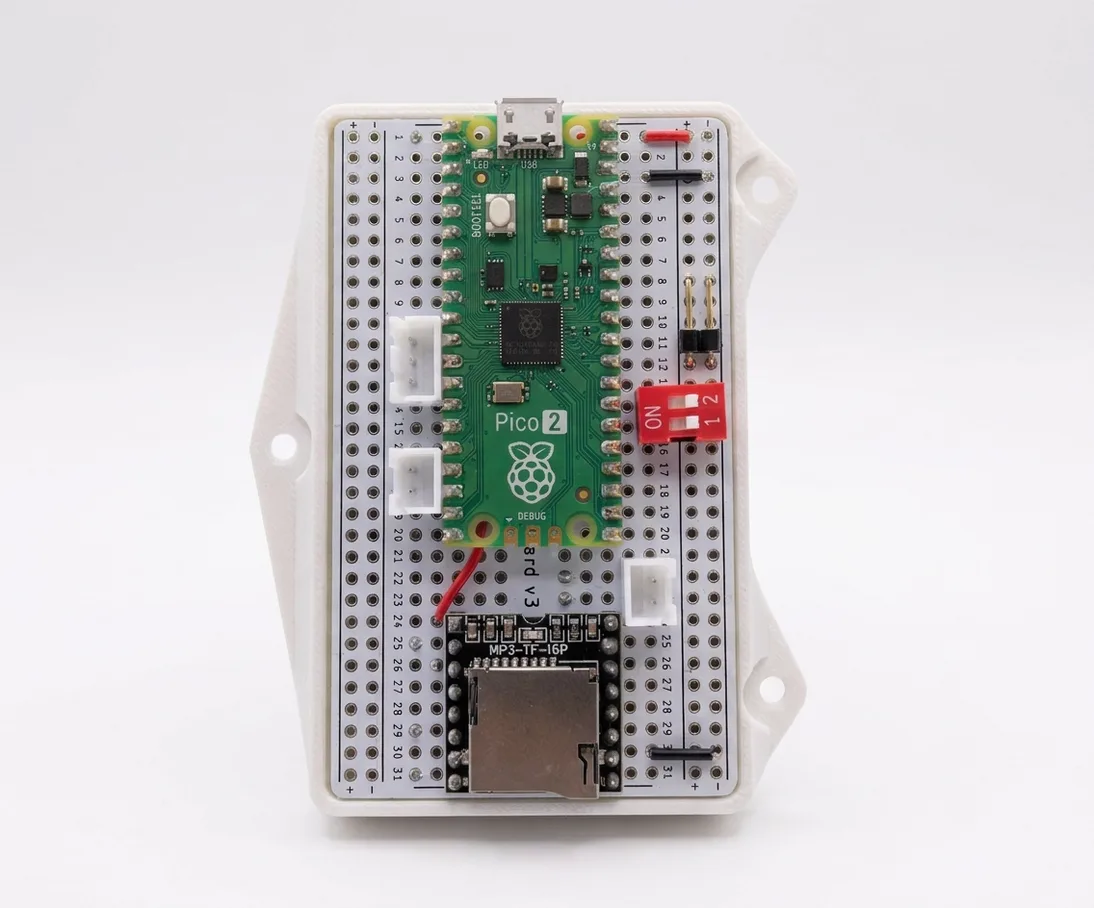
Inside the device runs our own firmware on a Raspberry Pi Pico 2 (the RP2350 chip), decoding the pulses of the rotary dial and watching the cradle state. Playback is handled by an MP3-TF-16P audio module with recordings on a microSD card, and the sound goes into the original handset. The electronics sit in a custom 3D-printed housing and tuck entirely inside the phone body — invisible from the outside.
The brief
The exhibition needed to tell its stories personally and up close — not from a speaker into the room, but into the ear, to one person at a time. And ideally so that visitors choose for themselves what they want to hear. A historical telephone was exactly the right medium: everyone knows how to use it, and nobody expects what happens after they dial.
The solution
We took an old telephone and replaced its insides with our own electronics. The firmware reads the pulses from the original dial and turns them into a recording selection. The handset cradle starts and stops playback, and the sound goes to the original handset. From the outside, there is no sign of any intervention — the phone looks and behaves authentically; it just tells stories instead of calling people.
Key features
- a historical telephone with its original look and dial mechanics
- recording selection by dialing a number — reading the original dial's pulses
- playback controlled by the cradle: lifting starts, hanging up stops
- audio through the original handset — personal listening in a noisy exhibition
- maintenance-free operation at the exhibition
Results & benefits
- an interactive exhibit up and running at the exhibition
- technology hidden out of sight inside an authentic device
- a showcase of Oidis's range: from web platforms to a restorer's hardware hack