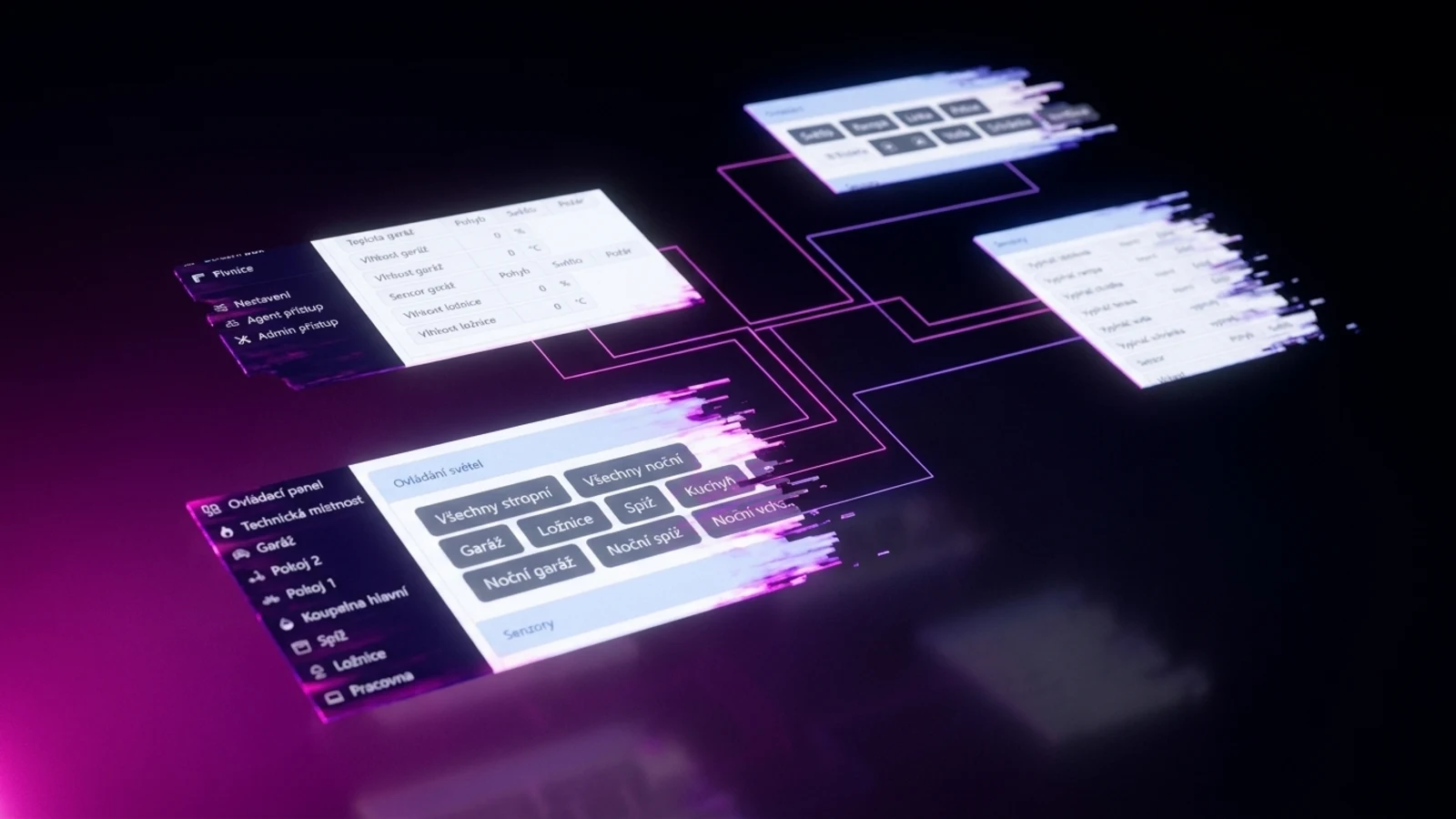
Rubble landfills
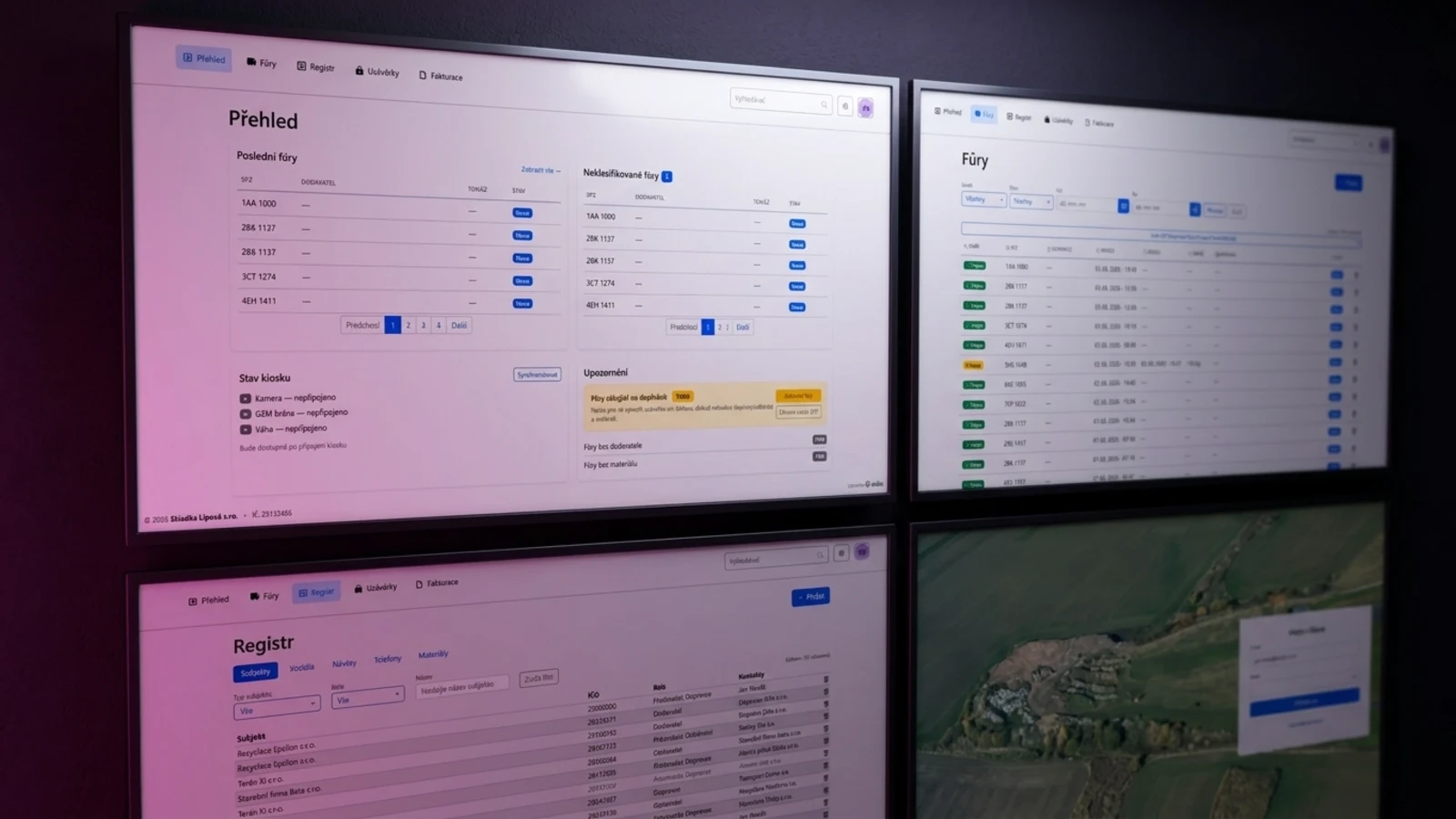
A waste management application
A camera photographs the licence plate, a weighbridge weighs the load and a gate logs the passage — but until recently each device kept its own records, and a person pieced them together. We built an application that brings the three devices together in a single delivery log. From the vehicle's arrival to the invoice, with no retyping.
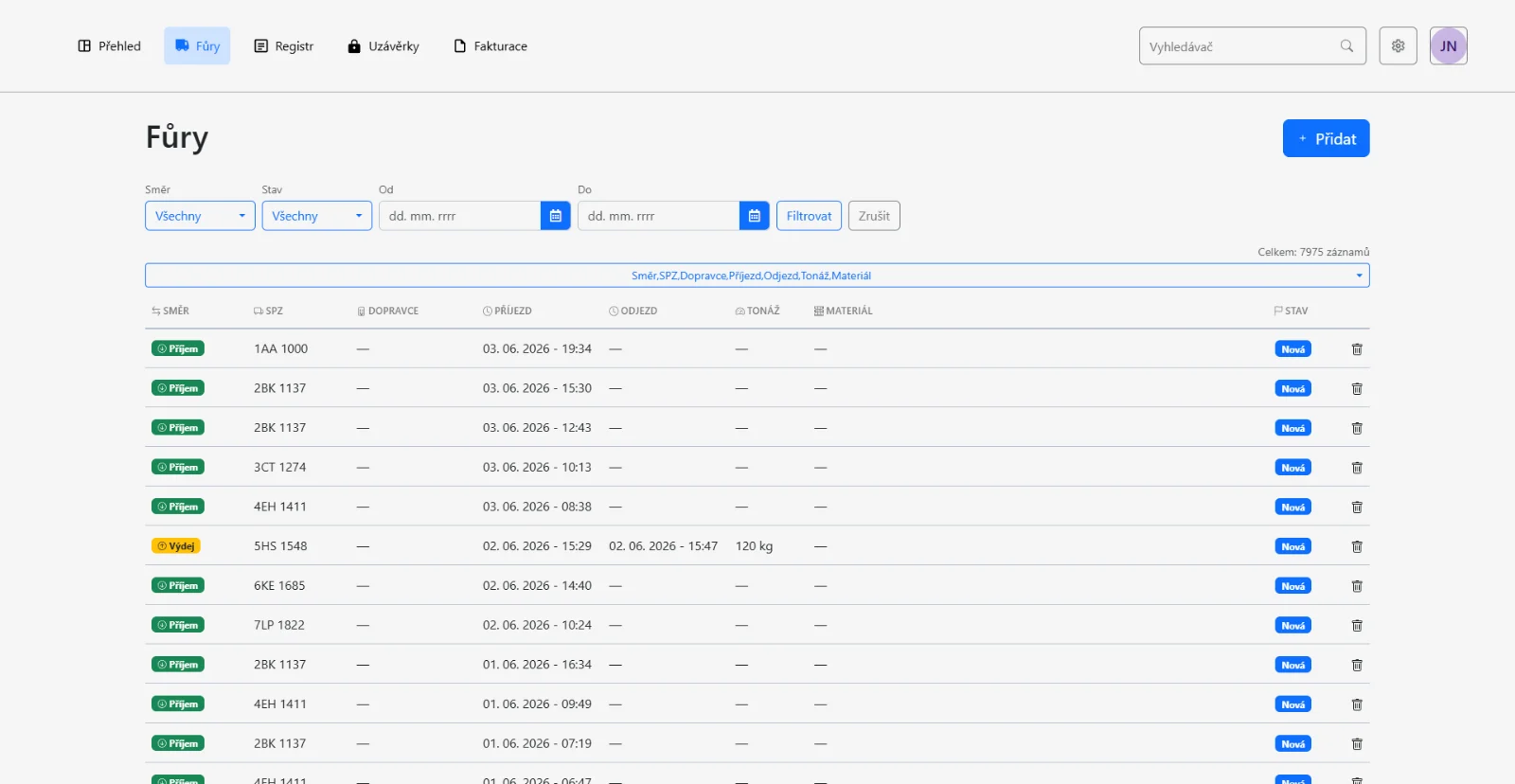
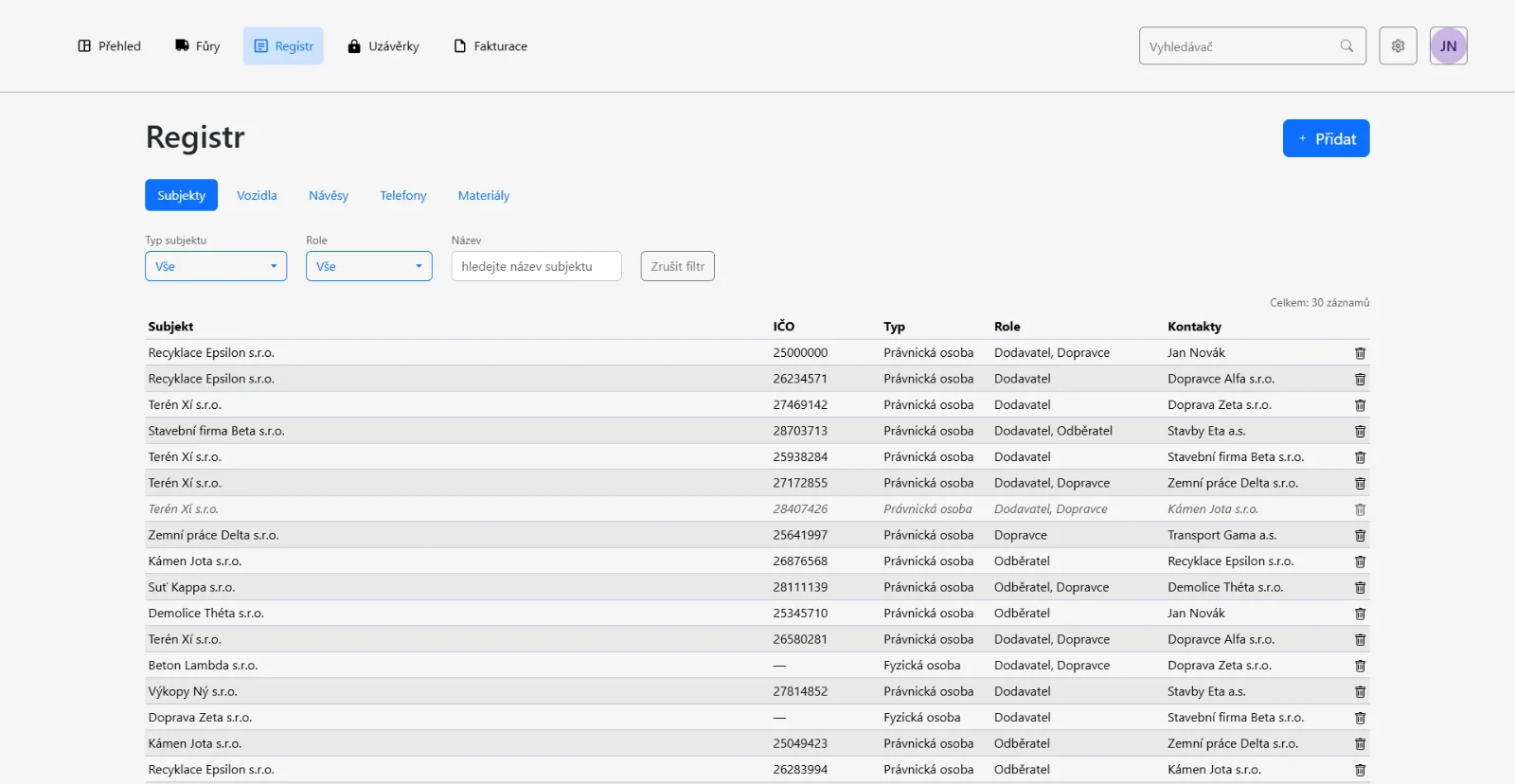
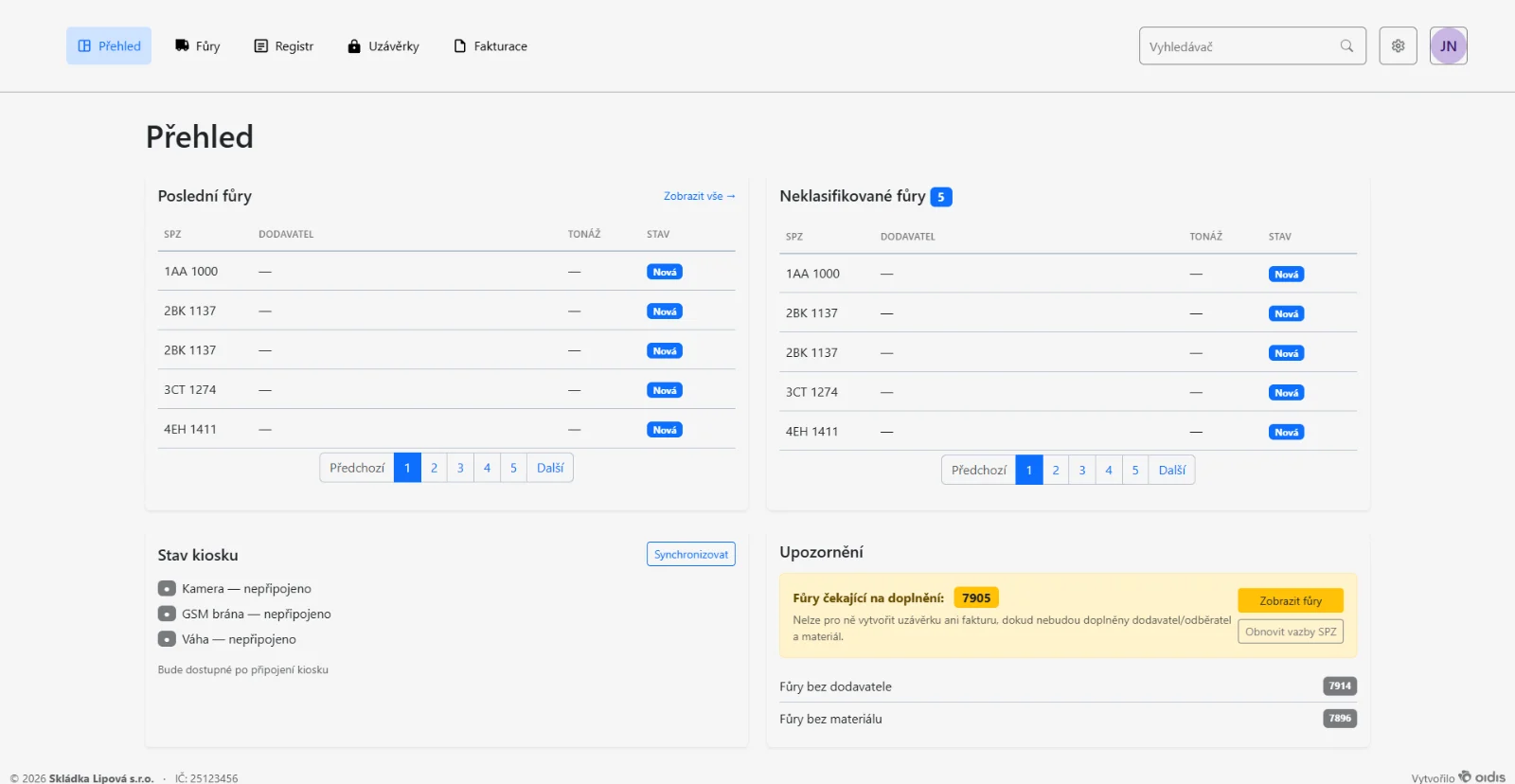
The heart of the application is the load overview: every delivery has a licence plate, a hauler, arrival and departure times, weights at entry and exit, material type and photos. The system assembles the records itself and only calls in the operator for incomplete ones. The registers hold vehicles, companies, phone numbers allowed to open the gate and a material catalogue linked to accounting codes. At the end of the month comes the closing: the period is locked, nobody can change the records any more and invoices are issued automatically. Haulers see only their own loads, accountants only their own closings.
Technology
We developed the application on the Oidis Framework in TypeScript — a responsive frontend with Bootstrap, a backend on Node.js with a MongoDB database. A kiosk agent runs at the landfill as a Windows service: through file bridges it reads output from the ANPR camera, the weighbridge and the GSM gate, and the central application pulls it over a reverse tunnel. For gate control we're building our own IoT device that replaces the original GSM gate and talks to the application directly — so hardware and firmware are entirely under our control. Invoicing goes to Money S3, statutory waste records to IS ENVITA. The solution runs in a Docker environment in the cloud, deployments are driven by a CI/CD pipeline and operations are watched by central monitoring.
The brief
Camera photos, weighing slips and gate-opening logs each lived somewhere else and were matched by hand. Errors carried through to invoicing and the statutory waste records. The landfill operator wanted one reliable record with an audit trail — plus a connection to accounting and official reporting, so the end of the month wouldn't be detective work.
The solution
Our kiosk agent runs at the landfill — a small service that collects output from the licence-plate-recognition camera, the weighbridge and the GSM gate, and assembles it by plate and time into a single delivery record. The central system pulls the data itself over a secure tunnel; if the connection drops, the agent keeps working and catches up once it's restored. Nothing gets lost. Loads move through states from a new record through approval to being locked in the monthly closing. From the closing, invoices go to Money S3 accounting and reports to the IS ENVITA waste records. Photo documentation, with previews, stays with each load. The kiosk is real hardware in operation, not just software — it collects data straight from the ANPR camera and the weighbridge. And we're taking gate control further: we're replacing the ageing GSM gate with our own IoT device, built in-house, that talks to the application natively, with no dependency on third-party hardware.
The brief was about function and reliability, not a visual redesign — so we built on proven UI components and pointed the time and budget where they add the most value: integrations, hardware and automation. That got the client a working solution faster and at a lower cost.
Key features
- automatic matching of the camera's plate reading, weighing and gate passage into a single record
- load overview with photo documentation, filtering and handling of incomplete records
- registers of vehicles, companies, phone numbers and materials linked to accounting codes
- gate opening by phone based on a whitelist synchronized from the application
- our own IoT device for gate control, replacing the GSM gate (in development)
- monthly closings with period locking and automatic invoicing
- exports to Money S3 accounting and the IS ENVITA waste records
- roles for operators, accountants and haulers (each sees only their own loads)
- e-mail notifications about incomplete deliveries
Results & benefits
- three independent hardware sources unified into one record, with no manual matching
- MVP deployed to production within 5 months of signing, second phase a month later
- an engineering-first approach: building on proven UI components instead of bespoke graphics shortened delivery and saves the client money
- immutable monthly closings provide an audit trail for invoicing and inspections
- invoicing and statutory waste exports in a few clicks instead of manual compilation
- resilient to outages: the agent at the landfill keeps working even without a connection to the central system
- real hardware in operation — the kiosk and now our own in-house IoT gate, not just software