Oidis Home
Smart home control
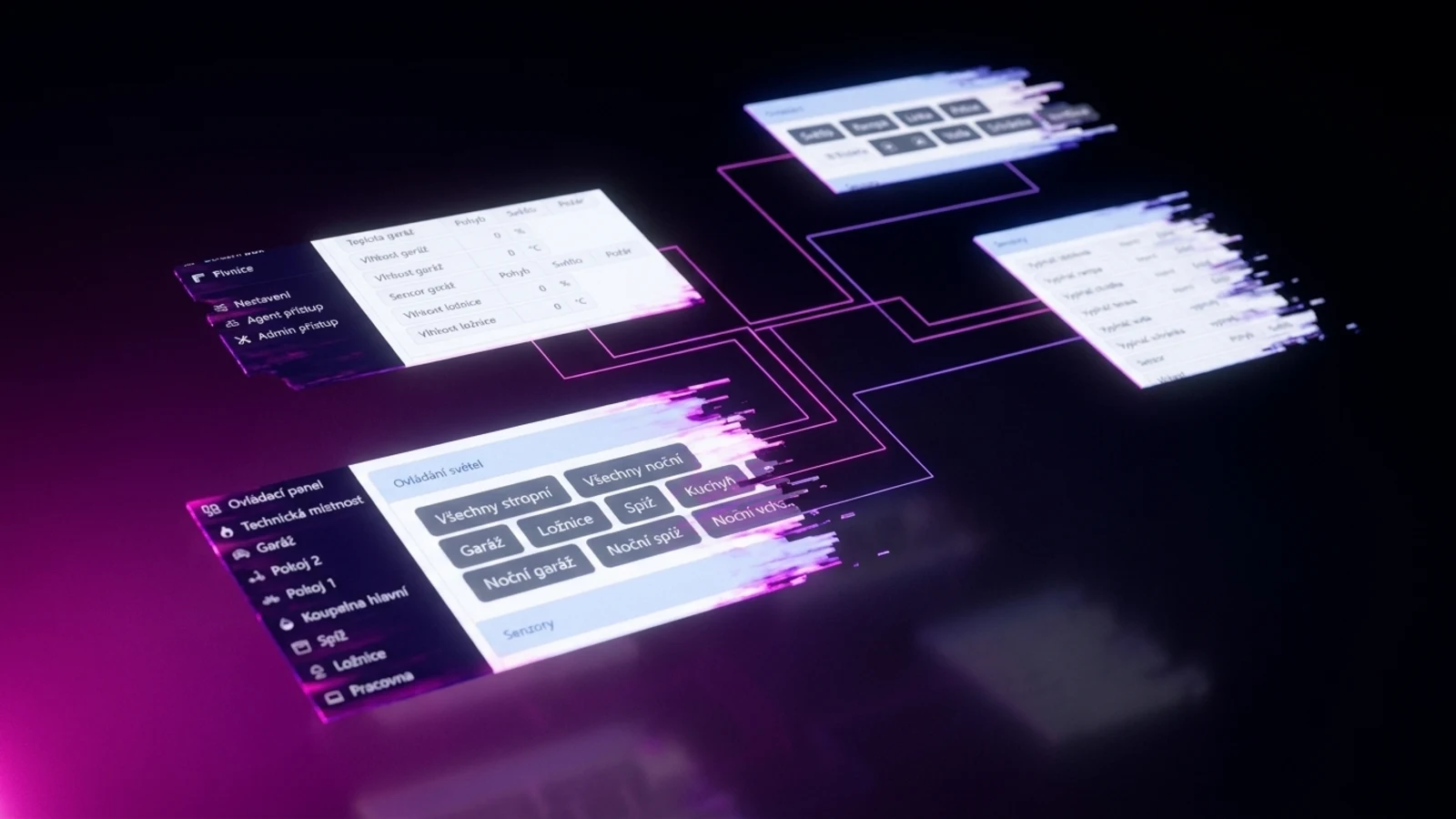
A smart home easily turns into a pile of apps — one for lights, another for blinds, a third for sensors. Oidis Home is one application for the whole house — with our own hardware underneath, from touch switches to 3D-printed sensor housings. Routines like “waking up” or “going to sleep” set dozens of devices with a single tap, and because the system's brain runs right in the house, it works even without the internet. We know this first-hand — we live in it ourselves.
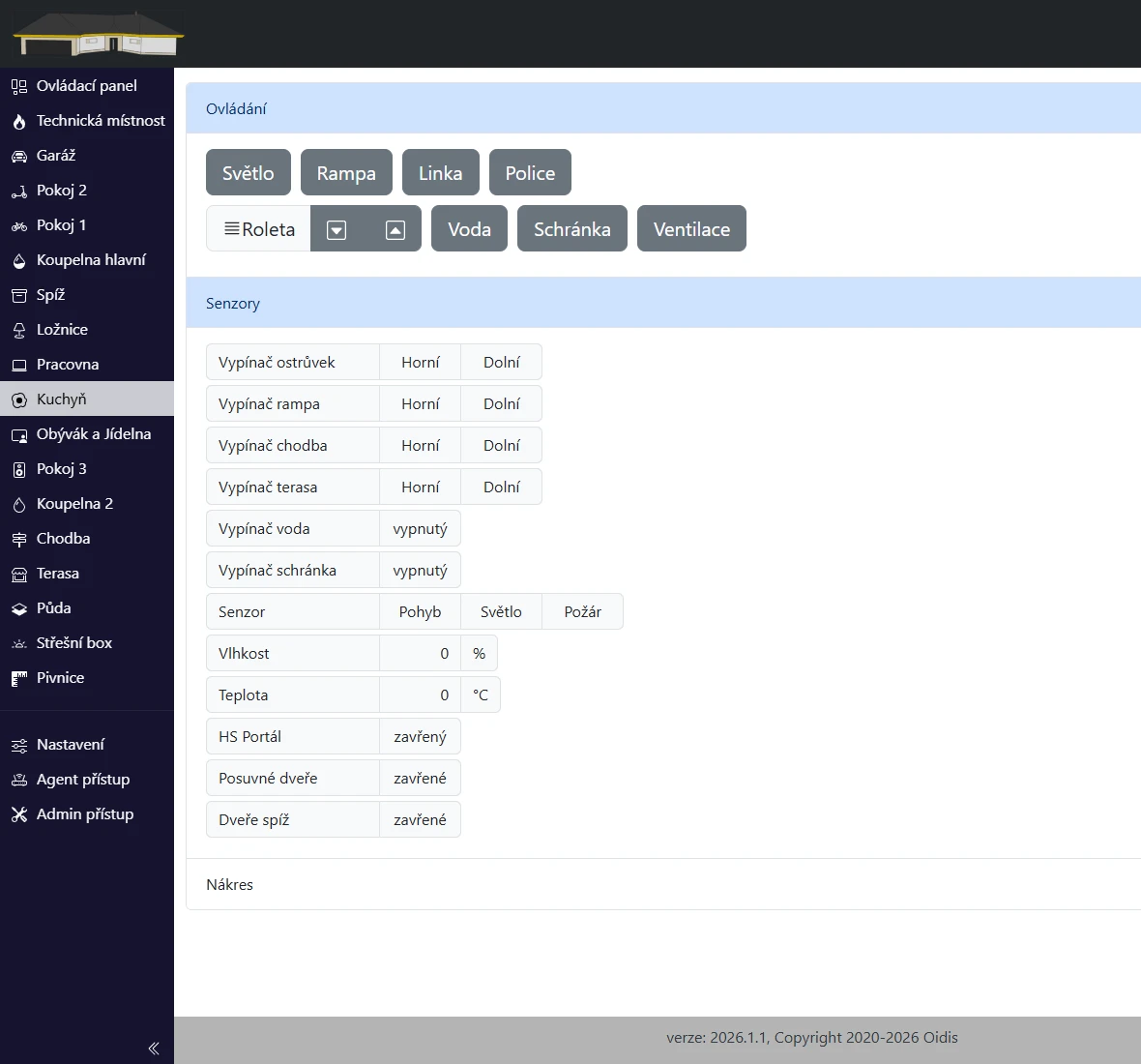
Every room has its own panel with what's actually in it: lights and dimmers, motorized blinds, ventilation zones, door locks or the garage door. Sensors continuously report temperature, humidity, motion, light and smoke — values update in real time without refreshing the page. The app understands household roles: parents have full control, children only what's theirs. The administrator also configures how the app connects to the house and has direct access to the control unit's diagnostics.


Technology
The application is written in TypeScript on the Oidis Framework — a frontend built from framework components, a Node.js backend with a MongoDB database. It talks to the house through our own IoT agent over WebSockets with immediate two-way state transfer; the application supports four connection modes, from direct local communication to a remote cloud hub with SSO sign-in.
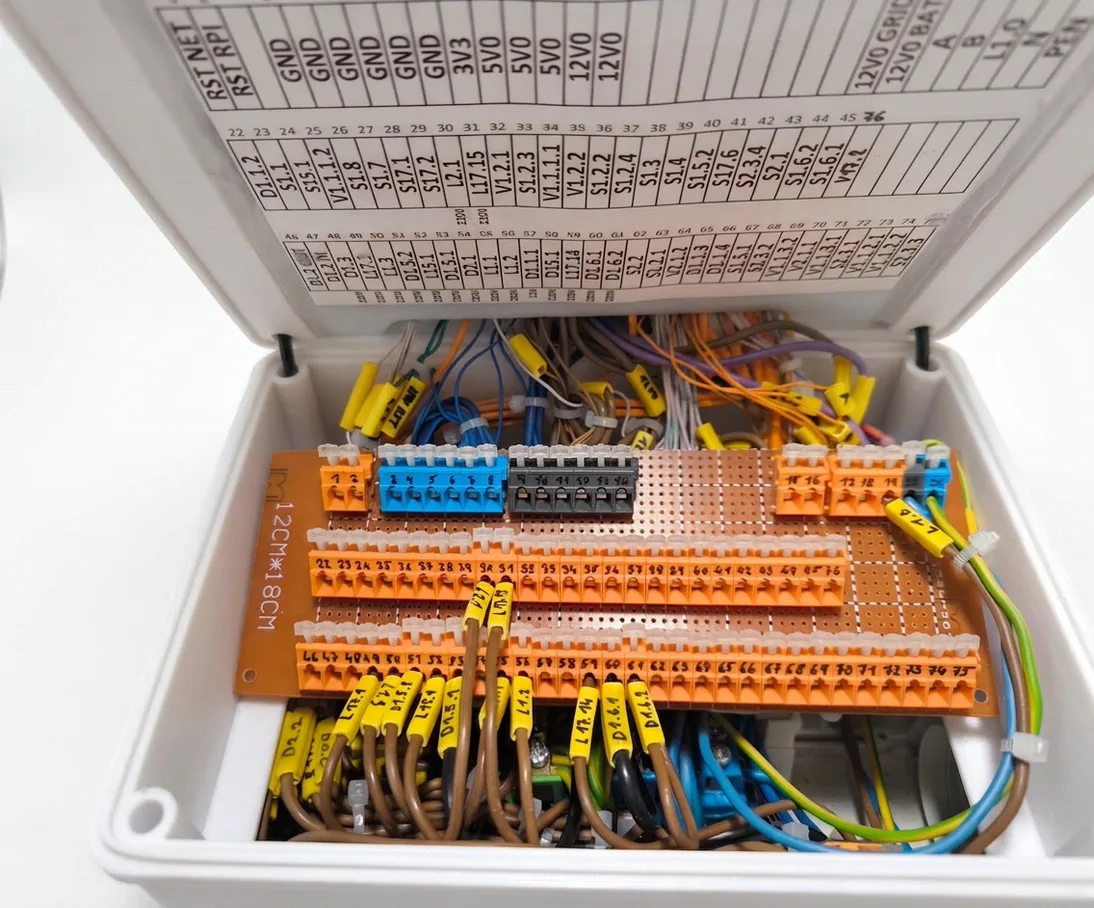
Underneath the agent is a bus of our own. Arduino-based nodes are wired around the house over RS485, and the agent speaks Modbus to them: it addresses them, reads states, switches outputs and can flash new firmware to them over the same bus — thanks to a custom bootloader, nothing has to be taken apart for an update. We have drivers for touch switches, dimmable lights, blind motors, door locks, I²C expanders and a set of sensors: temperature and humidity, motion, flame, light level, an optical gate and ultrasonic distance measurement. The fingerprint readers are a chapter of their own — the agent can enrol a print, download its template and upload it to another reader; it also monitors the match score and supports a guest mode.
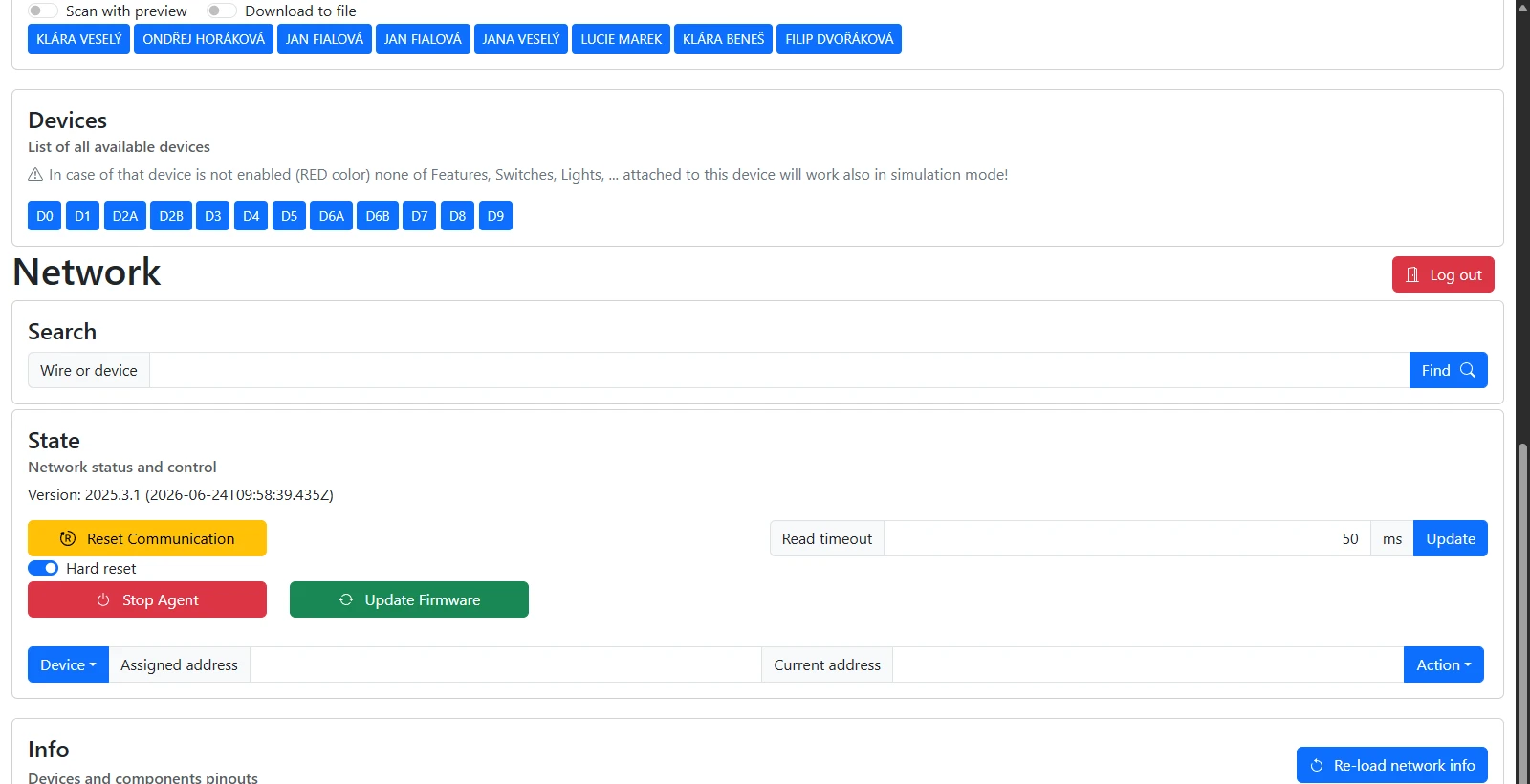
The agent's service console shows the house as it is actually wired: a list of nodes with addresses and firmware versions, the assignment of every pin with inputs, outputs and inverted logic colour-coded, a search by device or wire name, and a pinout export. For development without touching the house there is a full simulator of the whole installation. The solution runs in Docker across three separate environments for development, testing and production.
The brief
We were building a smart home for our own house — and we didn't want to end up with a set of vendor apps and clouds without which the lights won't come on in the evening. We wanted one interface for the whole house, operation independent of the internet, roles for children and adults, and a system that grows with the house. Why didn't we just buy something off the shelf? Because that would be no fun. Home is a DIY project through and through — we do it because we can, and because we want to diagnose our own products every day in real-world operation. Your own home is the strictest customer: there was no room for cutting corners.
The solution
Home is not just software — it's a complete R&D project from the circuit board to the app. Our own hardware includes touch switches and sensors. We designed their enclosures ourselves and print them on a 3D printer. The system controls third-party devices too, so the house is not hostage to a single vendor. At the heart is our IoT agent, which runs right in the house and talks to the wiring through unified addressing of rooms, devices and circuits. The web application connects to it in several ways: directly over the local network at home, through a secure cloud hub when away — and for development there's a full-featured house simulator. Device state travels instantly both ways over WebSockets, so a switch in the app responds like the one on the wall. On top of that we built the kind of diagnostic tools we'd want every installation to have: from continuous device diagnostics to looking up cable labels when, years later, nobody remembers which wire goes where. Routines join dozens of actions into one command, and access rights distinguish adults, children and guests.
Key features
- room-by-room control of lights, dimmers, blinds, ventilation, locks and garage doors
- custom hardware: touch switches and sensors in 3D-printed housings
- control of third-party devices — the house is not tied to a single vendor
- one-tap routines: waking up, leaving, bedtime, sleeping, all lights off
- real-time sensors: temperature, humidity, motion, light, smoke
- local operation without the internet, remote access through a secure hub
- family roles — children control only what they're allowed to
- a simulator of the whole house for development and testing without touching the real installation
- diagnostic tools: continuous device diagnostics and cable label lookup
- fingerprint readers on entry doors — guest mode and transfer of prints between readers
- agent service console: bus node map, pin assignments, addressing and device states
- firmware updates for the nodes over the bus, without taking the installation apart
Results & benefits
- the whole house in one application instead of a set of vendor apps
- control keeps working during internet outages — the brain runs at home
- routines cut daily house operation down to a single tap
- in live operation in a real house — our own product, not a demo, with daily diagnostics
- full R&D scope under one roof: PCBs, touch switches, 3D printing, firmware, cloud and the app
- architecture ready for deployment in other households