Stavebniny Návsí
Building materials sales
A builders' merchant with thirty years of history, over twenty thousand items in the catalogue and one clear condition: the new e-shop must not break what has worked in the company for years. So we built a store that exchanges data with the Pohoda accounting system on its own — prices, stock and orders. Customers shop online; the company keeps working its own way.
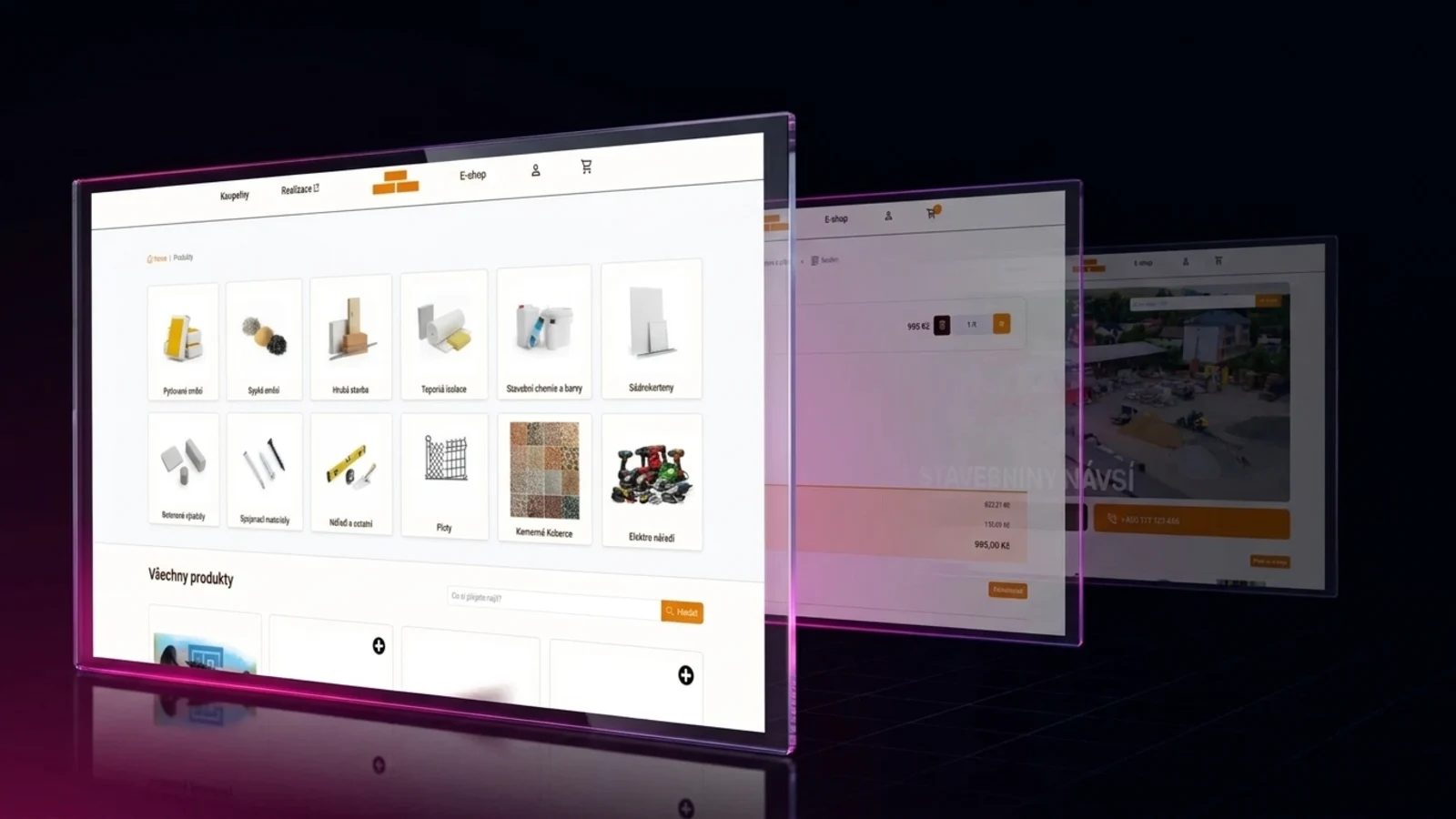
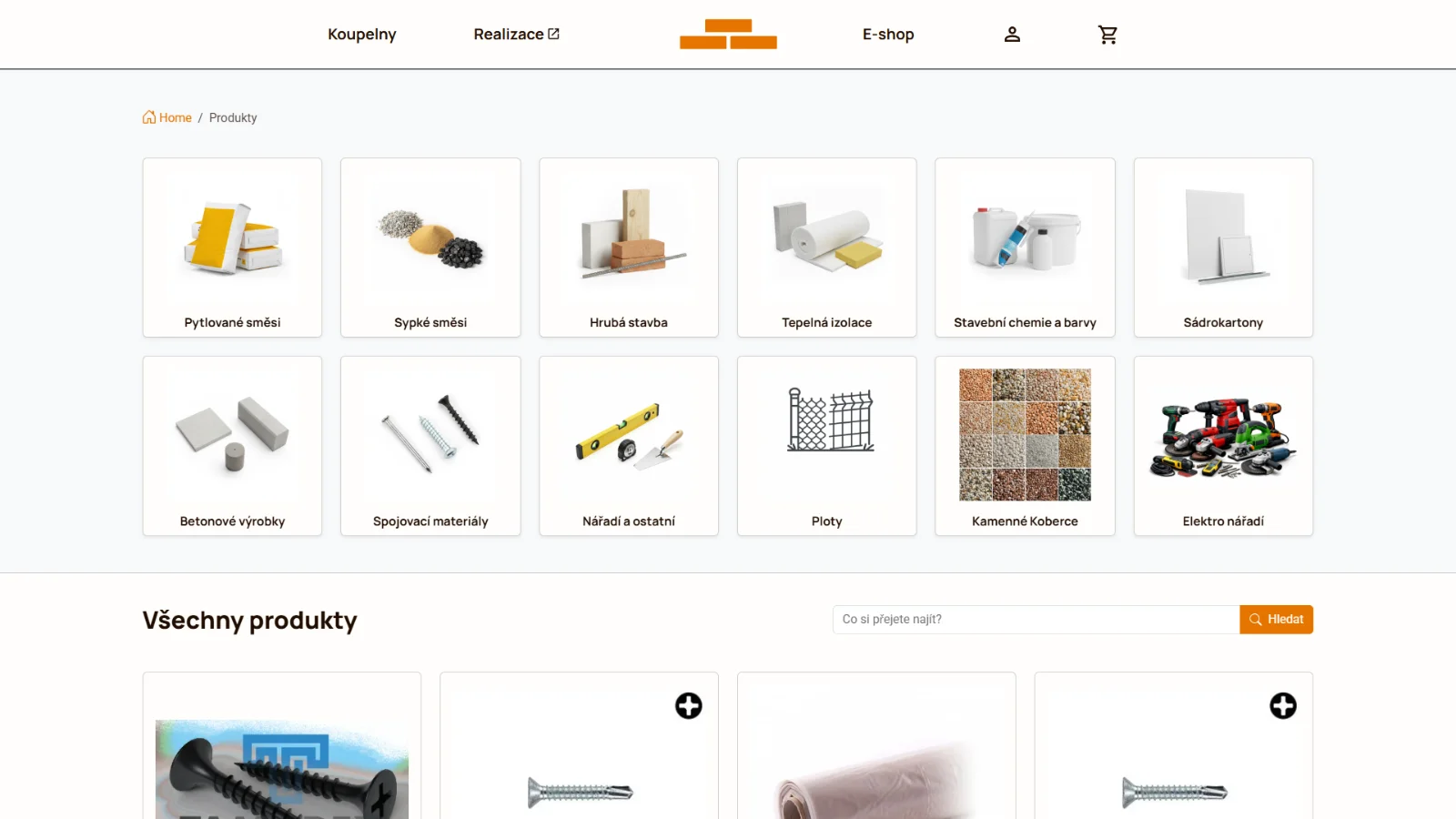
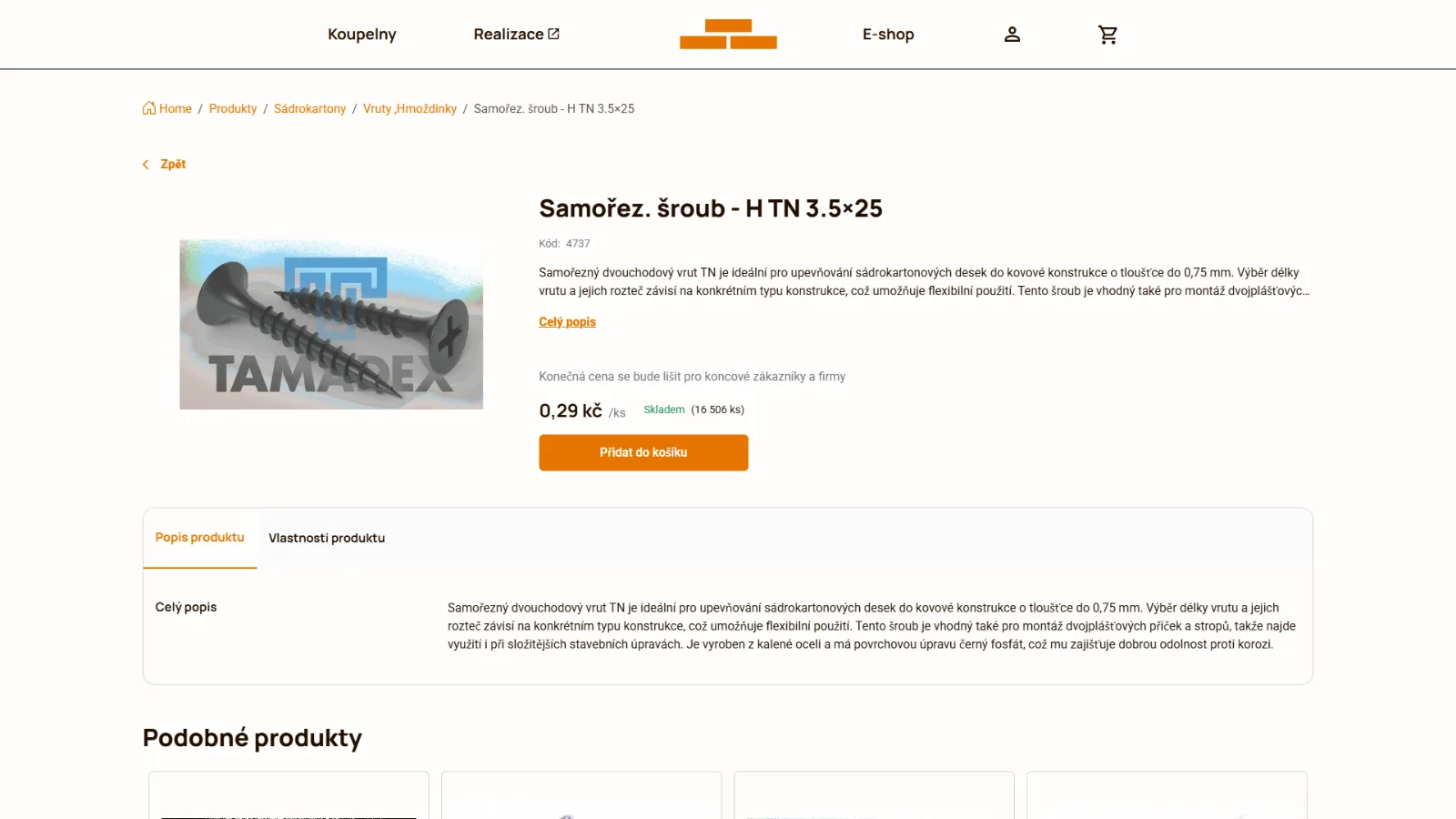
Customers browse a catalogue with real stock availability — what they see really is in the warehouse, because prices and stock levels are continuously pulled from Pohoda. The cart works without signing in and merges with the customer's account once they do. Checkout has three steps: cart, shipping and payment, summary. Customers can buy as individuals or as companies and pick the delivery point on a map. Returning customers get order history, downloadable documents and a “buy again” button. And the merchant? Orders, synchronization and the payment gateway are all managed from a single dashboard.

Technology
We developed the application on the Oidis Framework in TypeScript. The frontend builds on framework components with SASS styling, the backend runs on Node.js with a MongoDB database and a Typesense search index. The connection to the Pohoda ERP is handled by our own connector running as a service on the customer's side, linked through a reverse WebSocket tunnel. Online payments go through the GoPay gateway, and documents are generated as PDFs on the server. The whole solution runs in a Docker environment, driven by a CI/CD pipeline that keeps updates rolling out smoothly.
The brief
Until then, orders came in by phone and e-mail. The company wanted to sell online, but without a second set of records — the product range, prices, stock and orders had to stay in Pohoda, which the team is used to and which runs on the company's own server. On top of that came online card payments, automatically issued documents and a catalogue of more than 20,000 items that first had to be prepared for the web.
The solution
We built the e-shop on our platform and connected it to Pohoda with our own synchronization agent — a small service running directly on the company's server. It opens the connection outwards itself, so no ports had to be opened and the network stayed untouched. Every minute, the e-shop and Pohoda exchange what's new: products, prices and stock one way, orders and payments the other. Card payments are handled by the GoPay gateway right on the site, and both the customer and the merchant learn about the payment instantly, without refreshing the page. Documents are issued automatically and sent by e-mail. And those twenty thousand catalogue items? We processed and enriched them with AI and data mining — by hand it would have taken months.
Key features
- catalogue with stock availability and prices synchronized from the Pohoda ERP
- full-text search and filtering on a Typesense search index
- cart that works without signing in, merges on sign-in and sends abandoned-cart reminders
- three-step checkout for individuals and companies, with delivery point selection on a map
- GoPay online payments with instant payment notification
- automatic PDF documents and e-mail notifications for orders
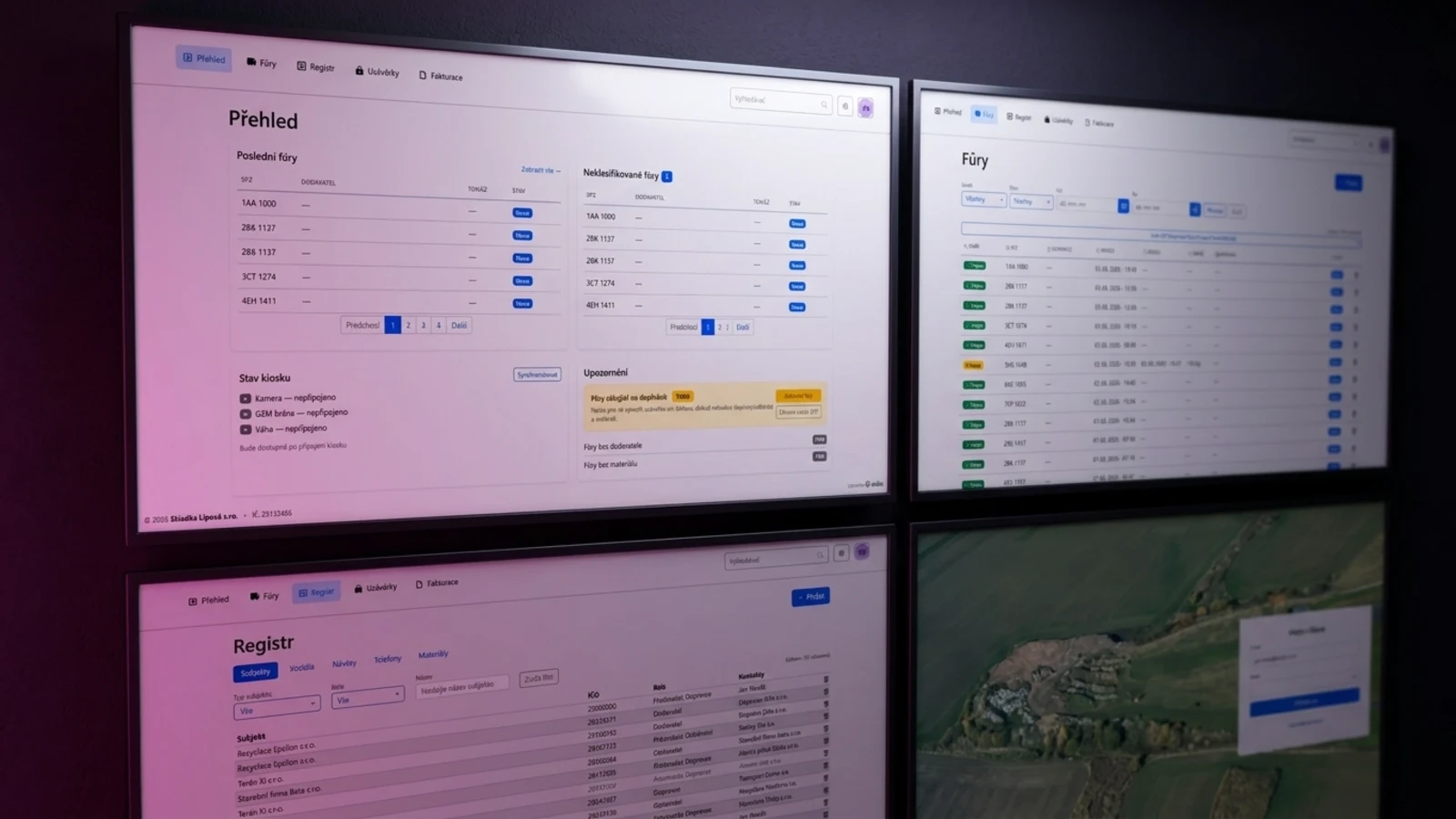
- orders, synchronization and the payment gateway managed from a dashboard
- real-time push notifications about order status changes
Results & benefits
- e-shop live on stavebninynavsi.cz since May 2025
- catalogue of 20,000+ items fully processed and enriched with AI
- digitization without disrupting the established processes of a company with a 30-year history
- orders are created in Pohoda automatically — zero manual retyping
- 11 incremental releases during the first year of operation (v2025.1.0 → v2026.1.0)
- online card payments without leaving the site (embedded GoPay gateway)
- operation with no changes to the customer's infrastructure (reverse tunnel, no open ports)